A solar generator changes RV travel less by what it powers than by how it refills. Park for two or three nights without hookups and the question is never just battery size — it is whether the panels can put back what the lights, fans, pump, and fridge took out the night before. Get the solar side right and a portable power station becomes a quiet, fume-free system for most of RV life. Get it wrong and you own an expensive battery that dies on night two. This guide starts with the panels and the math, then works through what an RV actually draws — including the air conditioner, where honesty matters most. All picks are based on manufacturer specifications, since our test lab is not running yet.
- Solar first: panels and charging for an RV
- RV loads reality check
- The air-conditioning wall
- 30-amp shore power and the TT-30 question
- Rooftop vs portable panels
- Boondocking math that holds up
- Picks by rig size
- Frequently asked questions
GadgetPreview is reader-supported. When you buy through links on our site, we may earn an affiliate commission.
Solar first: panels and charging for an RV
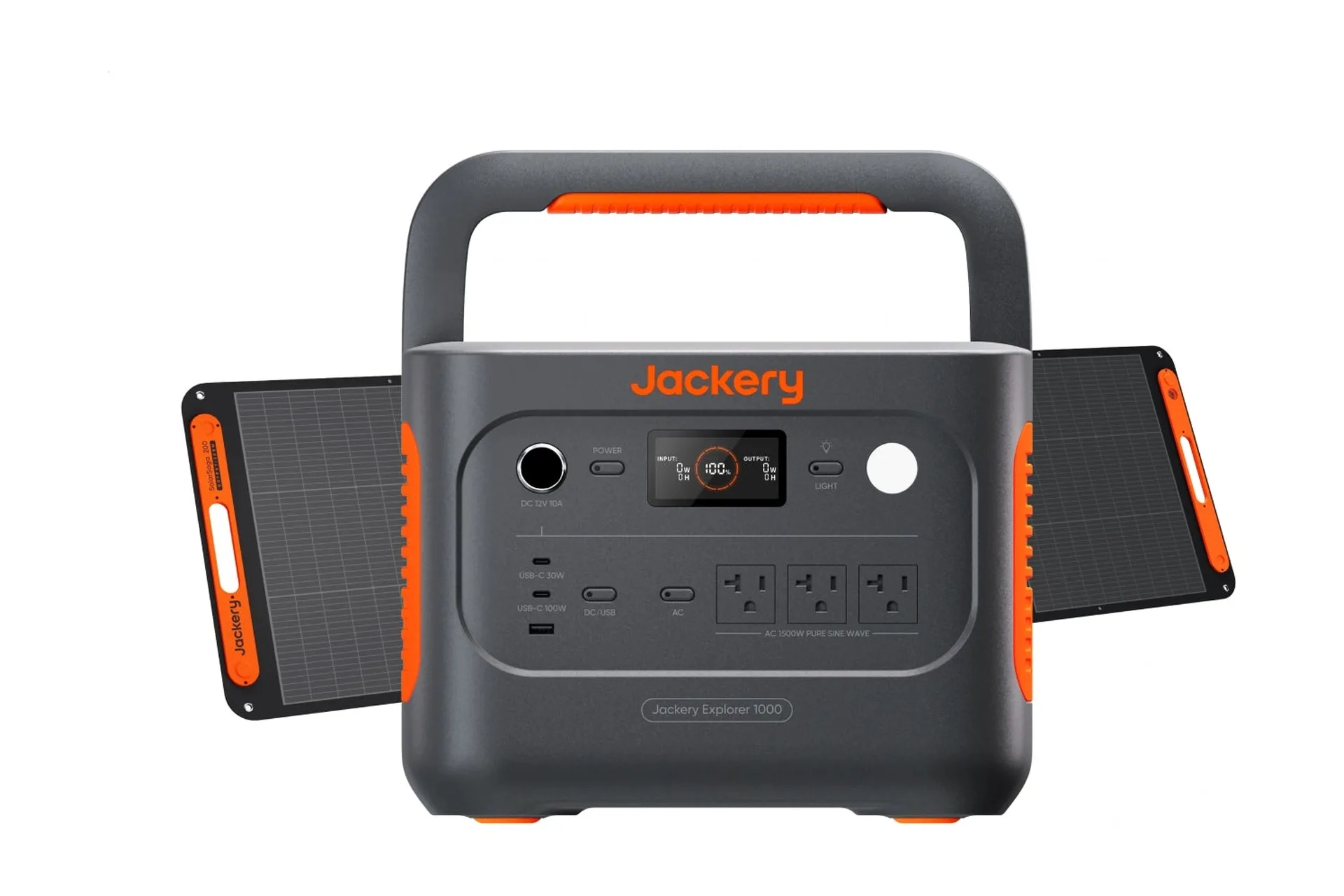
On an RV, solar is not an accessory — it is the fuel supply. A station charged only from the wall at home is a battery with a countdown timer; a station paired with the right panel array can run for as long as the weather cooperates. That is why the first spec to check is the station’s maximum solar input, which caps how much panel you can usefully connect.
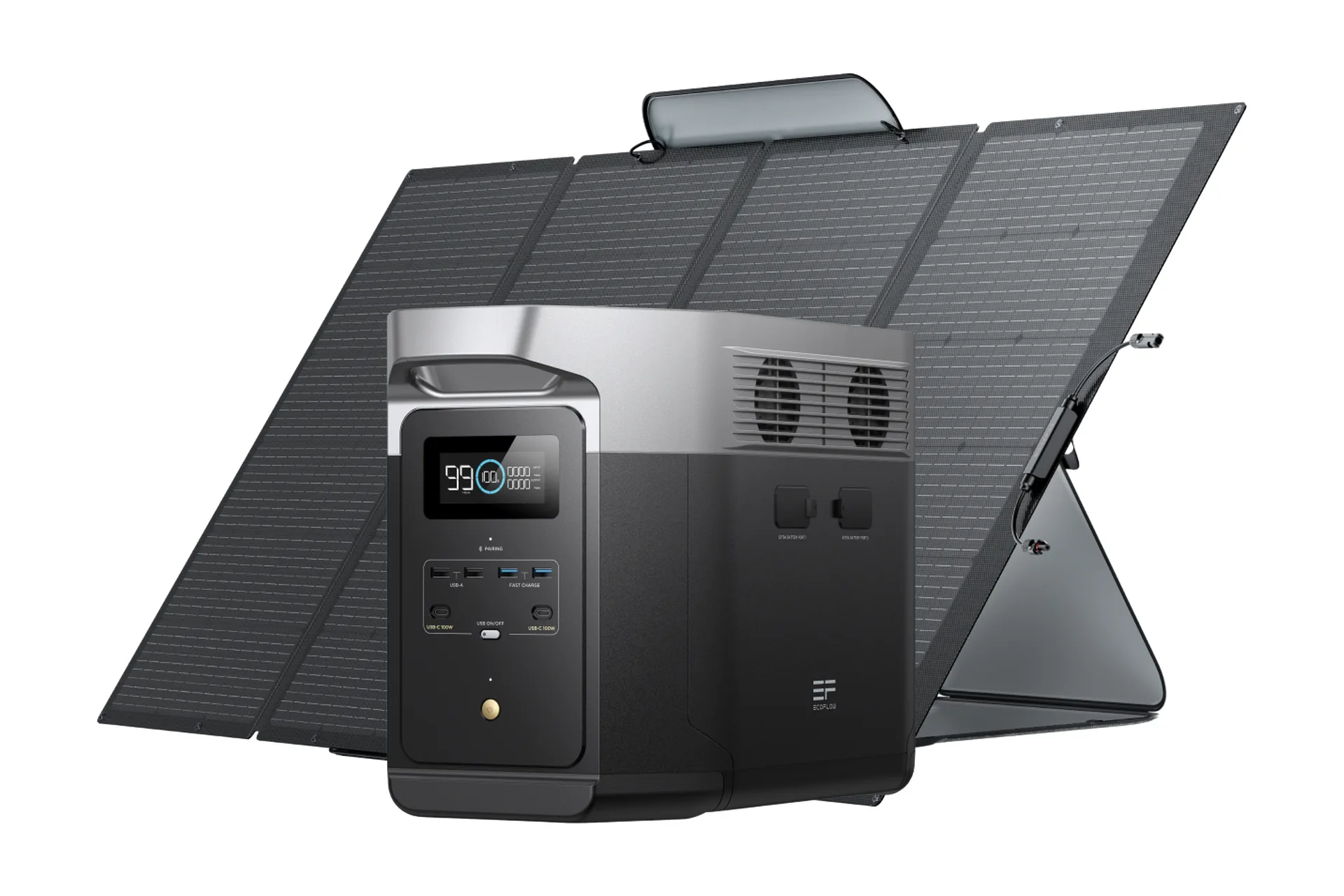
The math is simple: panel watts × peak sun hours × 0.75 = watt-hours recovered per day. The 0.75 factor covers heat, cable losses, and imperfect angles. A 220W portable panel in five peak sun hours recovers about 825Wh per day — enough for a careful van running lights, fans, and devices. A 400W panel in the same conditions recovers about 1,500Wh, covering a fuller trailer load with margin. Two cautions: a big panel on a station with a low solar ceiling is wasted money — the EcoFlow River 2 Pro accepts 220W max solar, so a 400W panel would be clipped to roughly half its output — and winter sun is not summer sun, so halve your harvest estimate from November through February in northern states.
For pairing basics, see our guide to a portable power station with solar panel, and for the category shortlist, our roundup of the best solar generator options.
RV loads reality check
Most of what makes an RV feel like an RV draws surprisingly little. The easy loads: LED lights at roughly 5–10W each, a vent fan at 20–40W, a water pump at 50–100W in short bursts, a TV at 40–80W, and phone or laptop charging. Run all of them sensibly for an evening and you use roughly 300–600Wh — well inside a mid-size station, night after night, if solar refills it by day.
The steady loads: a 12V compressor fridge is the biggest continuous draw in most rigs, averaging roughly 30–60W over 24 hours — about 700–1,400Wh per day in hot weather. A CPAP without a heated humidifier adds about 240Wh per night. Satellite internet draws roughly 40–75W and adds up fast if left on overnight.
The heavy loads: anything that makes heat or cold — microwave, kettle, hair dryer, space heater, and above all the air conditioner. A microwave for five minutes is only about 85Wh and no drama at all. Heavy loads for hours are the problem: duration, not the watt number alone, empties batteries. Our guides to a portable power station for van life and a portable power station for RV cover the same load lists for smaller and larger rigs in more depth.
The air-conditioning wall
Be direct about this, because a lot of marketing is not: a typical 13.5k BTU rooftop RV air conditioner draws roughly 1,300–1,700W while running, with a higher surge at startup. On a hot afternoon it runs a lot, and cooling a rig from early afternoon to early evening can easily take 2–3 kWh — before the fridge, lights, and fans ask for their share.
Set that against the largest stations here. A 2,048Wh station has about 1,740Wh usable after inverter losses; a 2,560Wh station about 2,175Wh usable. One hot afternoon of air conditioning can consume most or all of even a big portable station, leaving an empty battery for the night. A 400W panel recovering roughly 300W in real conditions slows that drain; it does not offset a 1,500W air conditioner.
The honest conclusion: a portable station supplements rather than replaces shore power or a fuel generator for air conditioning. Let it run everything else silently, and handle mild weather with fans, which draw a fraction of what a compressor draws. All-day off-grid air conditioning points to a large installed bank, a generator, or shaded hookup sites — not a single portable station.
30-amp shore power and the TT-30 question
Most travel trailers and many motorhomes are wired around a 30-amp shore-power connection, about 3,600W at the pedestal. A portable station lives in a smaller world — even the largest models here output 2,400–3,200W and store 2–2.6 kWh — so think of it as powering selected loads, not replicating the pedestal.
The practical question is how it connects. Some large stations offer an RV-ready TT-30 outlet, the same format as a campground pedestal, letting the rig plug in directly and feed its own outlets. Others offer household outlets only, so you run cords to individual appliances or use adapters — workable, but an adapter does not add capacity the station does not have. The plug format changes convenience, not limits.
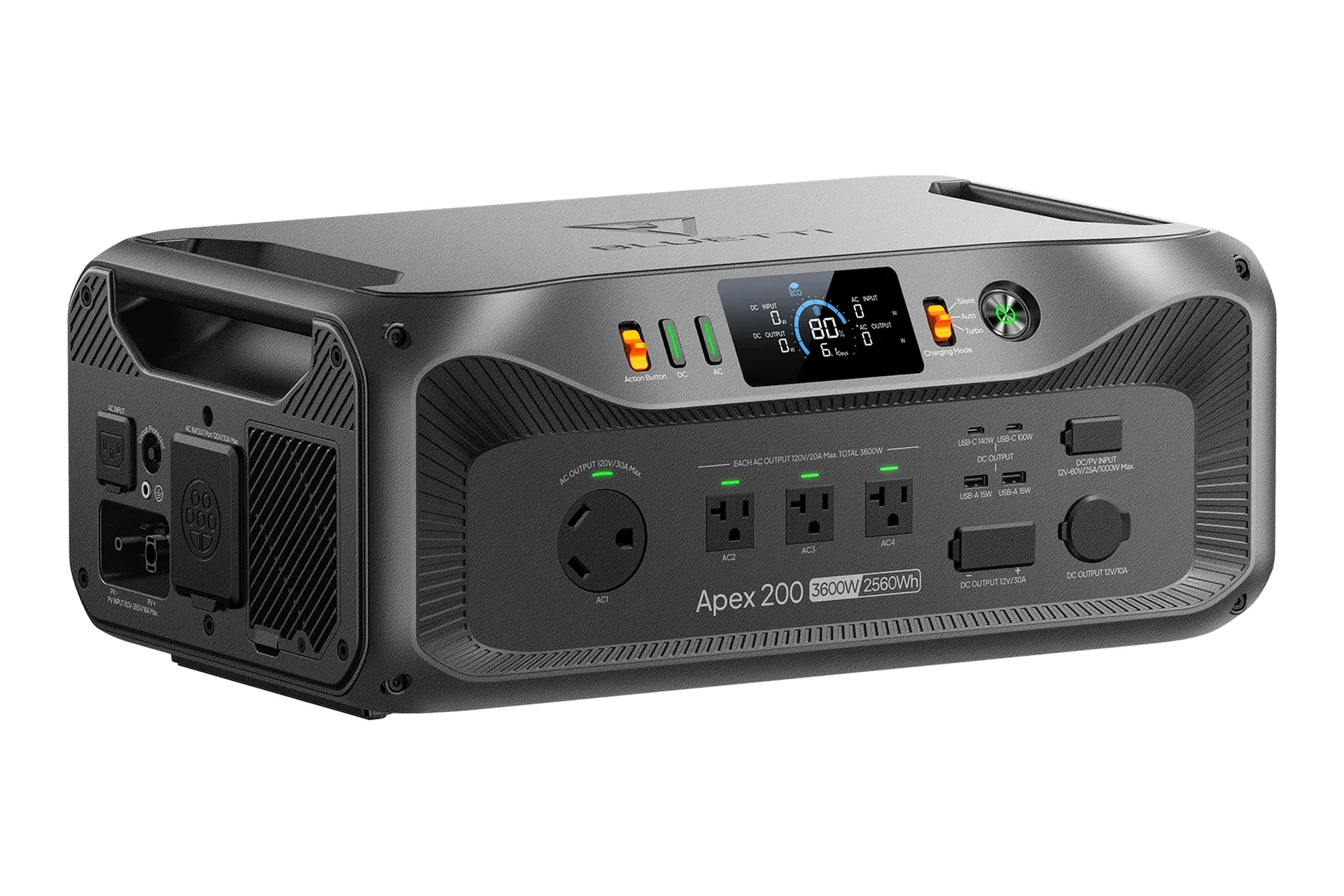
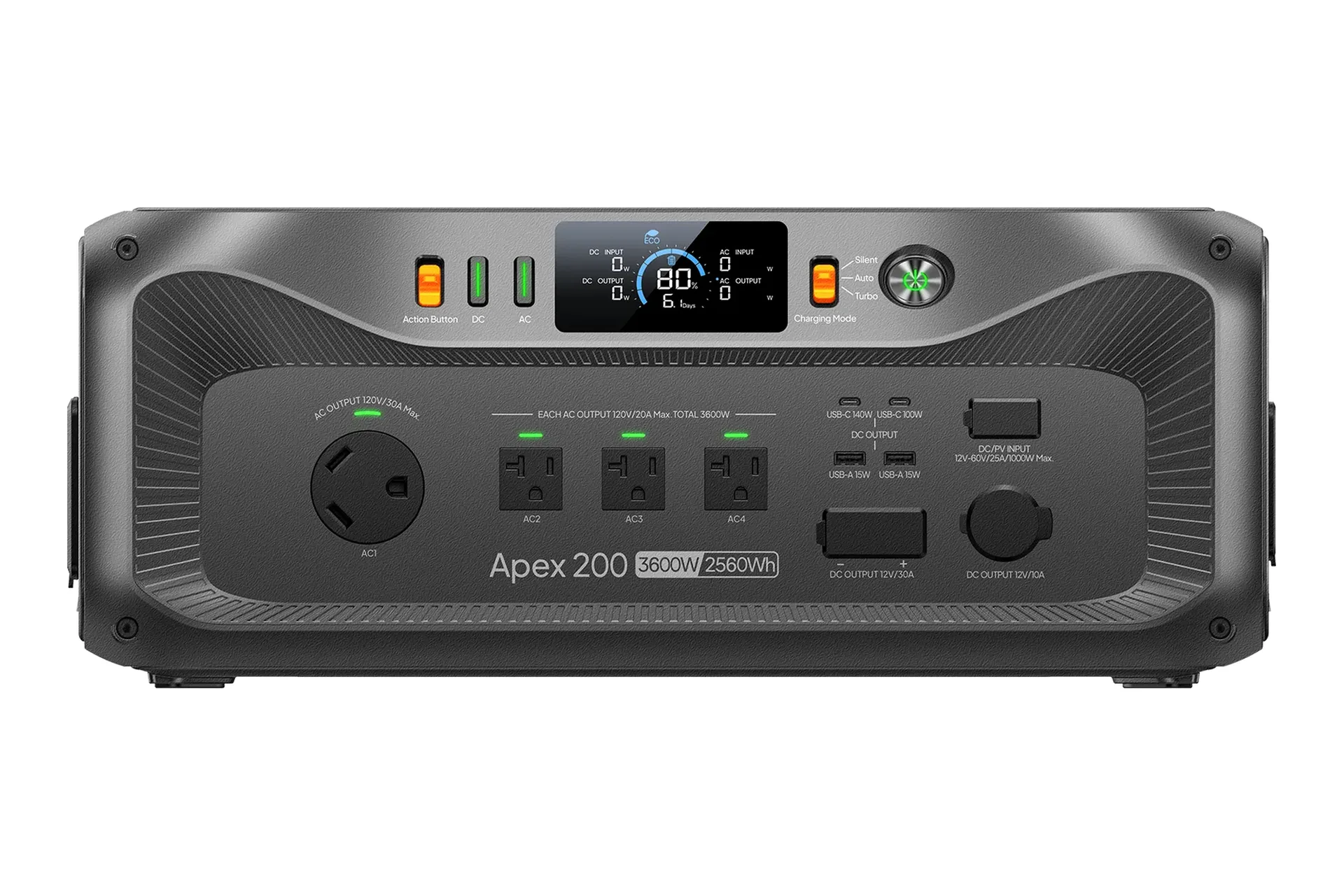
In this catalog, the EcoFlow Delta 2 Max and the BLUETTI Apex 200 sit in the big-station class for this role — the size and output tier where feeding a trailer’s core circuits is a realistic conversation. Smaller stations are better treated as appliance-level power: plug the TV or CPAP directly into the station. Confirm the current outlet configuration on the manufacturer’s listing before buying, since manufacturers revise models.
Rooftop vs portable panels
Rooftop panels are always deployed: they charge while you drive, hike, and store the rig, with no setup and nothing to steal. Their weakness is geometry — park in shade to keep the interior cool, and a flat rooftop array sits in that same shade at a fixed, rarely ideal angle.
Portable folding panels invert the trade. The rig sits in shade while the panel sits in full sun on a long cable, angled by hand and moved at midday if you care to. In a tree-covered campground that can easily double the day’s harvest versus a shaded roof. The costs are setup time, storage space, and bringing the panel in when you leave or weather turns. Many full-timers end up with both. If you choose one to start, choose portable — cheaper to try, and it teaches you your real consumption before you drill holes in a roof. Match panel wattage to your station’s maximum solar input, not its battery size.
Boondocking math that holds up
Boondocking works when the daily budget balances on an average day, not a perfect one. Build it in three lines. Daily use: fridge 900Wh on a warm day, lights and fans 250Wh, pump and devices 100Wh, TV for two hours 120Wh, CPAP 240Wh — roughly 1,600Wh per day for a comfortable trailer routine without air conditioning. Usable capacity: about 85% of rated, so a 2,048Wh station offers about 1,740Wh — just over one sunless day of that routine, which is the buffer that carries you through an overcast day. Daily harvest: covering 1,600Wh needs about 430W of panel in five peak sun hours (430 × 5 × 0.75 ≈ 1,610Wh), or about 600W in three and a half winter hours.
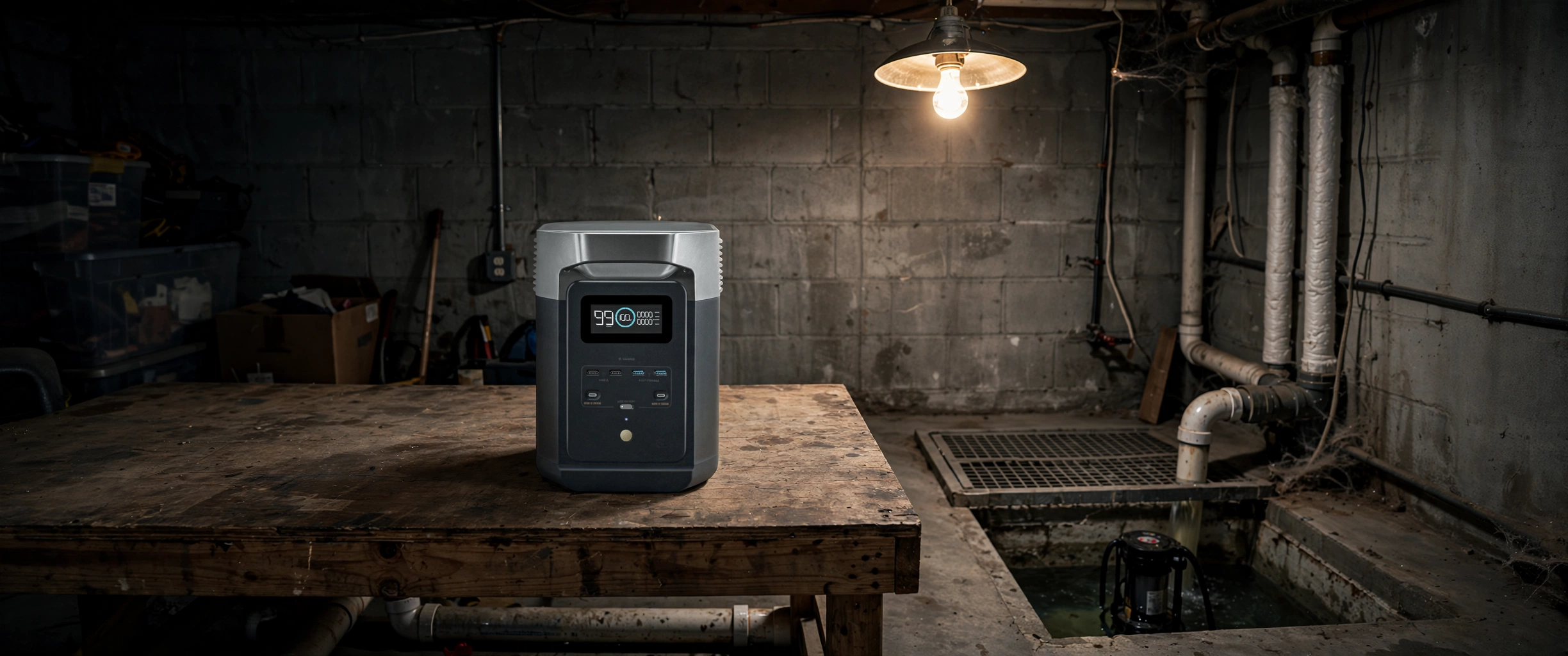
That is why mid-to-large stations pair with 400W-class panels minimum for trailer duty, and why solar ceilings — 500W on the Delta 2, 1,000W on the Delta 2 Max and Elite 100 V2 — shape the whole system. Run your own numbers with our power station size calculator, using your fridge, CPAP, and screen time rather than a generic estimate. If the budget only balances in perfect June sun, it does not balance.
Picks by rig size
These picks are based on manufacturer specifications, since our test lab is not running yet. Prices are around the figures shown at time of writing and move with sales.
Vans and minimal rigs: EcoFlow River 2 Pro
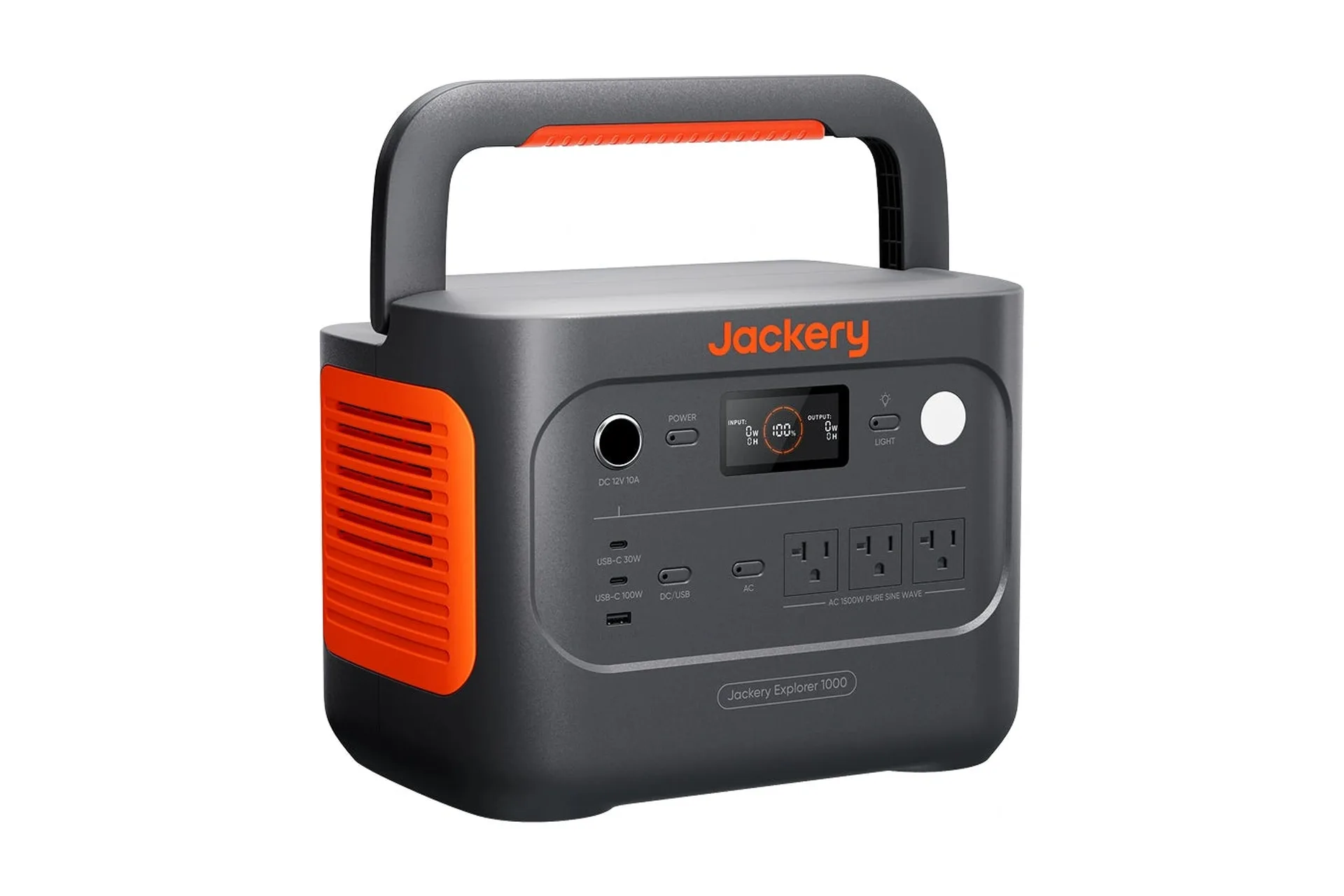
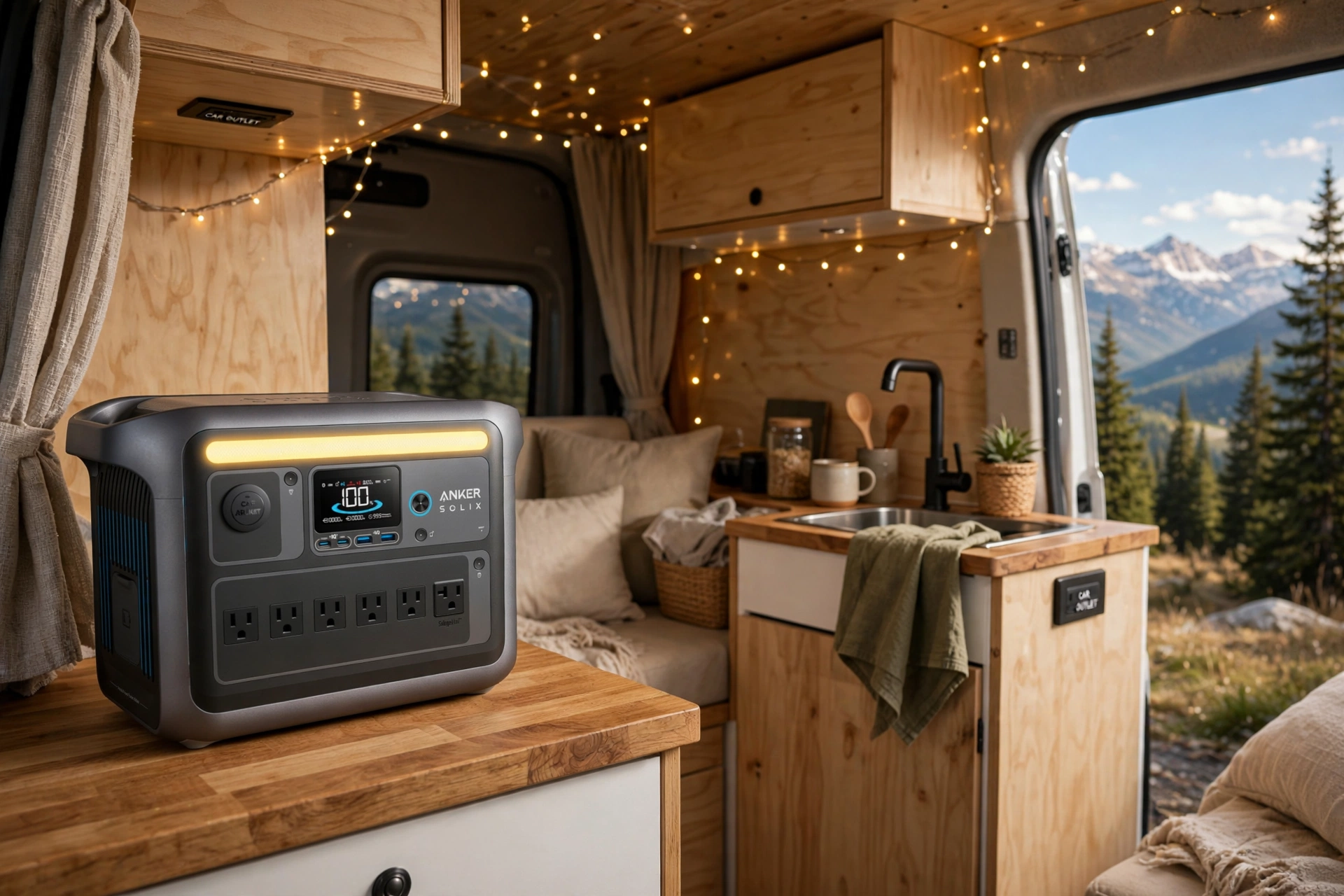
For a van, pop-up, or small trailer running lights, a vent fan, phones, a laptop, and maybe a small 12V fridge, the River 2 Pro’s 768Wh LiFePO4 battery and 800W output cover the routine at just 17 lbs. Its 220W max solar input pairs naturally with a single 220W portable panel — about 825Wh on a good day, matching careful van consumption almost exactly. Around $300 on sale at time of writing. Check price The limit is headroom: add a humidified CPAP or long TV evenings and you will outgrow it.
Mid-size trailers: EcoFlow Delta 2 or BLUETTI Elite 100 V2
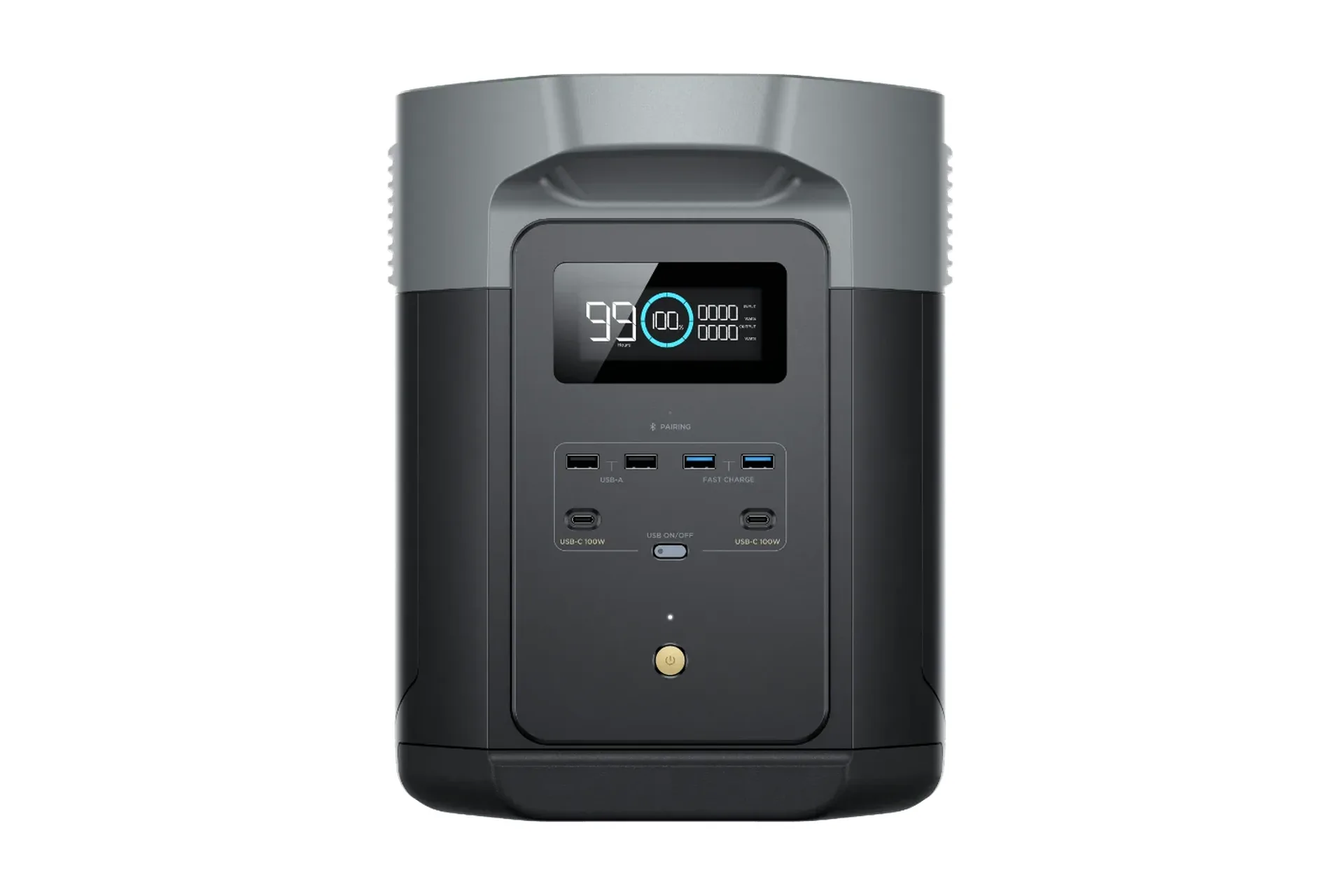
The 1kWh class is the sweet spot for most trailers. The Delta 2 offers 1,024Wh, 1,800W output, 500W max solar, and an approximately 80-minute full AC recharge, at 27 lbs — around $400 on sale at time of writing. Check price The Elite 100 V2 matches it at 1,024Wh and 1,800W output (2,700W Powerlifting) at 25.3 lbs, and doubles the solar ceiling to 1,000W max — the better pick if your plan leans hard on panels to refill quickly on short winter days. Around $430 at time of writing. Check price Either runs the easy-load list plus a fridge for a day; neither runs the air conditioner for an afternoon.
Larger trailers: EcoFlow Delta 2 Max or BLUETTI Apex 200
Step up when the fridge is large, stays are long, or two people work from the rig. The Delta 2 Max stores 2,048Wh, outputs 2,400W, accepts 1,000W max solar, and expands to 6,144Wh, at 50 lbs — around $1,000–1,200 on sale at time of writing. Check price The Apex 200 stores 2,560Wh, outputs 3,200W, accepts up to 3,000W max solar per BLUETTI launch materials, and is expandable, at 59.3 lbs — $1,099 launch / $1,399 regular at time of writing. Check price Even here, treat air conditioning as a shore-power job and let the station own everything else. For more sizing walkthroughs, browse our guides hub.
Frequently asked questions
Can a solar generator run my RV air conditioner?
Only briefly. A 13.5k BTU rooftop unit draws about 1,300–1,700W and can use 2–3 kWh over a hot afternoon — most or all of even a large portable station. Treat the station as a supplement for everything else, and shore power or a fuel generator as the air-conditioning source.
How many watts of solar panel does an RV need?
Work backward from daily use with the 0.75 rule. A comfortable no-AC trailer routine of roughly 1,600Wh per day needs about 400–500W of panel in good summer sun, and more in winter. Never size beyond the station’s maximum solar input — extra panel is clipped.
Are rooftop or portable panels better for an RV?
Rooftop panels charge automatically but sit wherever the rig is parked, often in shade. Portable panels can sit in full sun while the rig stays shaded, which usually wins in campgrounds. Many travelers eventually use both.
Can I plug my whole RV into a power station?
On large stations with an RV-ready TT-30 outlet, you can feed the rig’s circuits directly, within the station’s output and capacity limits. On smaller stations, plug individual appliances into the station instead. Either way, the station does not replicate a 30-amp pedestal.
How long can I boondock on a solar generator?
Indefinitely, in principle, if daily harvest matches daily use and the battery covers one cloudy day. Weather decides it — size the buffer first, then panels.